Hempcrete or AAC Blocks? What We Tell Builders Who Ask
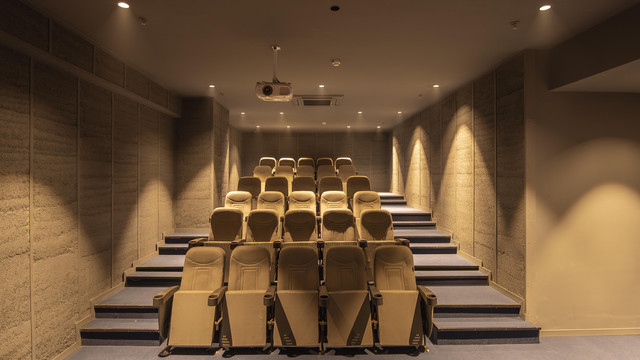
Most projects we walk into these days are built with AAC blocks, and that makes sense. They're lighter than brick, they hold the heat out better than brick, and they go up fast. We're not here to run them down. But "better than brick" was never a hard bar to clear, and it isn't really the question. What matters is how a wall behaves once there are people living and working behind it: whether the room is bearable in May, whether the air goes stale, and what the block cost the environment before it ever reached site.
What the two materials actually are
AAC stands for autoclaved aerated concrete. It's a lightweight concrete, really: cement, lime, sand and a little aluminium powder, mixed so it traps thousands of tiny air bubbles, then cured in a high-pressure steam oven at around 180–200°C. Those air pockets are what make it lighter and warmer than a solid brick.
Hempcrete is a different sort of thing altogether. It's the woody core of the hemp plant mixed with a lime binder and water. It isn't load-bearing on its own, so it goes in as walls or insulating layers around a frame, or as a layer over a wall that's already there. The point to hold onto is simple: one of these is made in a furnace and the other is grown in a field. Nearly every difference below traces back to that.
How the wall actually feels
On paper the two look close. Both insulate reasonably well, and if a single conductivity figure were the whole story you could call it a tie. It isn't, because comfort in an Indian summer doesn't come down to one number.
Hempcrete has a handy double quality. It insulates, but it also carries enough mass to take in the day's heat slowly and let it go slowly, so the indoor temperature stays fairly flat instead of climbing every afternoon. On our sites the indoor swing has settled to around 1.5°C. The other thing, and this is where AAC can't follow, is that hempcrete breathes. When the air is heavy it draws moisture in, and when the air dries out it gives it back, which keeps indoor humidity in the comfortable 40–60% range on its own. AAC is a sealed block. It doesn't manage moisture, and if it does take on water its insulation gets worse. Across a Kolkata monsoon that is the difference between a room that feels fresh and one that feels sticky. Put it together and you get roughly 40% less cooling load at the height of summer, and walls that aren't still pushing the afternoon's heat back into the room at nine at night.
Where they really part ways: carbon
AAC is a cement product baked with plenty of heat, so making it puts CO₂ into the air. That's where it starts. Hempcrete goes the other way. The crop pulls CO₂ out of the air while it grows, the lime keeps absorbing more as it sets and hardens, and all of it stays locked in the wall for as long as the building stands. Ours holds about 110 kg of CO₂ per cubic metre. You can put up a wall that adds quietly to the problem, or one that takes a little carbon out of the air and keeps it there, and from across the room the two look identical. We go deeper on this in how a hemp wall takes carbon out of the air.
The things a datasheet skips
Because it breathes and the lime keeps it at a high pH, hempcrete resists mould and pests by itself, with no added chemicals, and it doesn't off-gas, so the air in the room stays cleaner. It handles fire well and it's good with sound too; we used it to build India's first hempcrete acoustic AV room, in Rajarhat. AAC has its quirks on site by comparison. The blocks are brittle and chip easily, they want a specific thin-bed mortar rather than ordinary mix, and they'll soak up water if they aren't sealed and finished properly.
Why it matters beyond one building
Construction is one of the largest sources of carbon going, and the demand for cooling in Indian cities climbs every year. A wall that stores carbon and cuts the cooling bill pushes back on both at once. For the people inside it means smaller electricity bills and a little less strain on the grid when everyone is running their ACs through a heatwave, plus air that's nicer to breathe. Spread that across a whole society or a campus and the choice of block stops being a small detail.
If you're about to specify AAC for something, or you've got a building that turns into an oven every summer, the easiest next step is to try hempcrete on one space and see the numbers for yourself. We'll work out the comfort and carbon figures for a single area before you commit to anything larger.
Thinking about hempcrete for a project?
We build hempcrete walls and interiors across India, from our base in Kolkata. Tell us about your space and we'll spec it for one area first.
Talk to us